
Understanding Teasing: A Lifelong Social Skill
Teasing is part of everyday life. Sometimes it helps build friendships. Other times, it can hurt feelings. Some teachers want a tease-free classroom. But teasing isn’t going away. That’s why it’s important to teach students how to handle teasing the right way.
What Is Teasing?
Teasing is a social exchange. It can feel friendly, neutral, or negative. It depends on the tone, intent, and relationship. When done in a healthy way, teasing can help students:
- Build friendships
- Reduce tension
- Feel included
- Laugh and connect
But teasing can also be used to hurt. When it’s meant to embarrass or control someone, it crosses the line into bullying.
When Does Teasing Become Bullying?
Teasing becomes bullying when the goal is to harm. That might be emotional pain, embarrassment, or exclusion. Teaching students to see the difference is key to preventing problems.
Teasing vs. Bullying
| Teasing | Bullying |
|---|---|
| Builds friendships | Breaks trust and isolates people |
| Happens between equals | Happens when one person has more power |
| Respects feelings | Tries to embarrass or hurt |
| May involve shared jokes | Often includes mean or personal attacks |
Example:
A student jokingly calls a friend “Professor” because they always know the answers. Both laugh. That’s teasing.
But calling someone “stupid” or mocking their accent? That’s bullying.
How to Teach Students About Teasing
Educators can help students understand teasing by talking about it openly. These steps help guide those conversations.
✅ Teach Social Cues
- Talk about body language and tone
- Share real-life examples
- Ask students how they feel in different situations
✅ Listen Without Judging
If a student says someone made fun of their clothes, don’t jump in with reassurance like “But your clothes are great!”
Instead:
- Ask open questions
- Listen fully
- Help the student come up with a plan
✅ Steps to Take When Teasing Goes Too Far
- Stay calm and confident
- Say clearly: “Please stop. That’s not funny to me.”
- If it doesn’t stop, walk away
- If it stops, say thank you and explain why it bothered you
- If it continues, report it to a trusted adult or at antibullyingsoftware.com
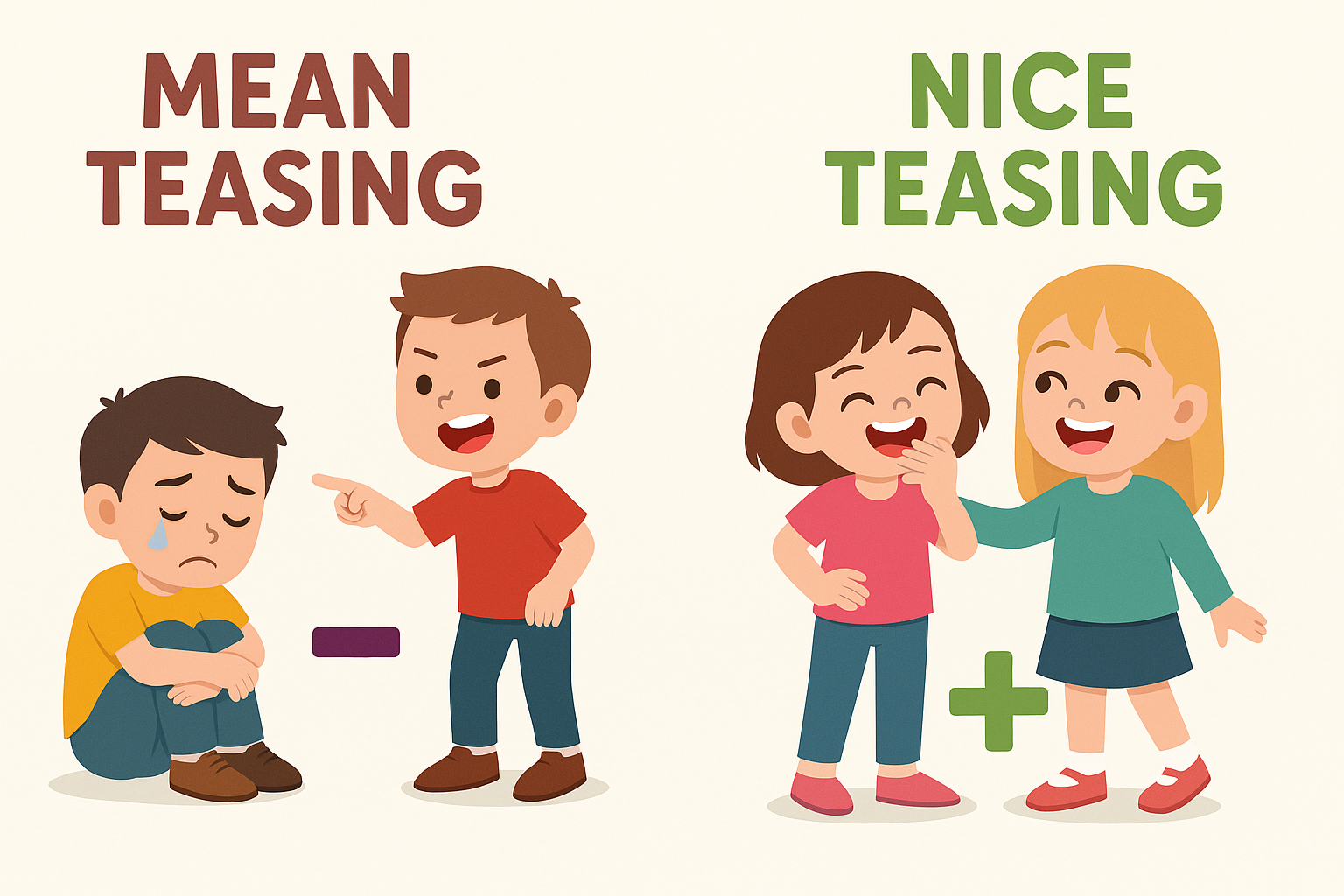
A Math Analogy: Mean Teasing vs. Kind Teasing
Think of teasing like math:
➖ Mean Teasing is Negative
- It subtracts from your happiness
- It divides friendships
- It makes people feel small
- It comes from someone who doesn’t care how you feel
👉 This is bullying
➕ Kind Teasing is Positive
- It adds laughter and connection
- It multiplies your confidence
- It helps solve social tension
- It comes from someone who likes you and means no harm
👉 This is healthy teasing
Final Thought
Teasing will always exist. Let’s use the classroom to help students understand it. Teach them how to tell the difference between friendly teasing and harmful bullying. Give them the tools to respond with confidence and kindness. These skills will help them throughout life.
